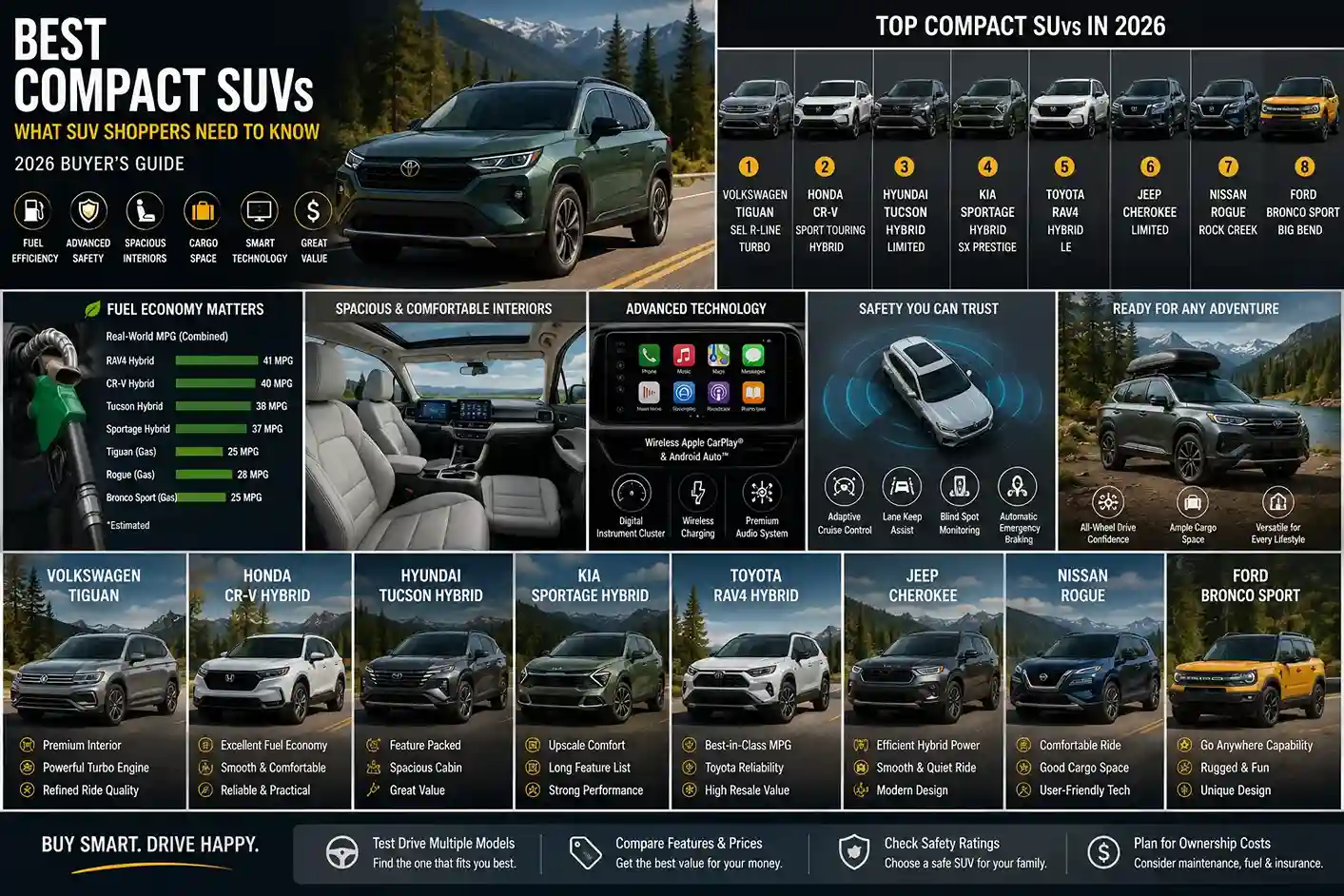
Best Compact SUVs in 2026: What Every SUV Shopper Needs to Know Before Buying
The compact SUV segment has become one of the most competitive and popular categories in the automotive market. Buyers today expect more than just extra ground clearance they want excellent fuel economy, advanced safety features, spacious interiors, modern technology, and long-term reliability in one practical package.
Whether you’re upgrading from a sedan, purchasing your first family vehicle, or looking for a fuel-efficient hybrid SUV, choosing the right compact SUV can feel overwhelming. Every manufacturer promises the perfect blend of comfort, performance, technology, and value, but the reality is that each model excels in different areas.
Some SUVs prioritize fuel economy with hybrid powertrains, while others focus on premium interiors, powerful turbocharged engines, or exceptional cargo space. Understanding these differences helps you invest in a vehicle that matches your lifestyle rather than simply following popularity or marketing claims.
In this comprehensive guide, we’ll explore the best compact SUVs available in 2026, compare their strengths and weaknesses, and explain the features that matter most when making your purchase decision.
Why Compact SUVs Continue to Dominate the Market
Compact SUVs have become the preferred choice for millions of drivers because they combine the best characteristics of sedans, hatchbacks, and larger SUVs. They offer a comfortable driving position, practical cargo space, modern safety systems, and impressive efficiency without the higher ownership costs associated with midsize or full-size SUVs.
Manufacturers continue to improve these vehicles by introducing hybrid technology, more refined interiors, larger infotainment displays, and advanced driver-assistance systems. As a result, buyers no longer need to compromise between comfort, efficiency, and practicality.
Key advantages include:
- Higher driving position for better road visibility
- Spacious cabins with generous rear-seat legroom
- Flexible cargo areas for luggage, groceries, and outdoor gear
- Available all-wheel drive for improved traction
- Better fuel economy than larger SUVs
- Advanced safety technology as standard on many models
- Strong resale value and reliability across leading brands
For families, commuters, and adventure enthusiasts alike, compact SUVs offer an excellent balance of versatility and affordability.
What SUV Shoppers Should Consider Before Buying
Before comparing individual models, it’s important to understand the features that have the biggest impact on ownership satisfaction.
Fuel Economy
Fuel costs remain a major consideration for most buyers. Hybrid compact SUVs deliver significantly better real-world fuel economy than traditional gasoline-powered models while maintaining smooth acceleration and quiet operation.
Popular hybrid options include:
If your daily routine involves long commutes or frequent highway travel, a hybrid model can reduce fuel expenses over time.
Interior Comfort
A comfortable cabin makes every drive more enjoyable. Look for supportive front seats, ample rear-seat legroom, quality materials, and low cabin noise. Features such as heated and ventilated seats, dual-zone climate control, and reclining rear seats can greatly enhance comfort.
Premium trims often include leather upholstery, panoramic sunroofs, ambient lighting, and power-adjustable seating.
Technology and Connectivity
Modern SUVs now offer technology that was once limited to luxury vehicles. Useful features include:
- Large touchscreen infotainment systems
- Wireless Apple CarPlay and Android Auto
- Digital instrument clusters
- Wireless charging
- USB-C ports
- Over-the-air software updates
- Premium audio systems
- Built-in navigation
- Voice controls
A responsive and intuitive infotainment system contributes to a better ownership experience.
Safety Features
Safety should always be a priority. Most leading compact SUVs now include advanced driver-assistance technologies such as:
- Automatic emergency braking
- Adaptive cruise control
- Lane departure warning
- Lane-keeping assist
- Blind-spot monitoring
- Rear cross-traffic alert
- Parking sensors
- 360-degree camera systems
These features improve confidence and help reduce the risk of accidents during daily driving.
Cargo Space
Cargo capacity is particularly important for families and travelers. A practical cargo area with fold-flat rear seats provides flexibility for transporting luggage, sports equipment, furniture, or groceries.
Models such as the Hyundai Tucson Hybrid and Kia Sportage Hybrid are known for offering generous cargo space, while others prioritize interior refinement over maximum storage.
Best Compact SUVs Compared
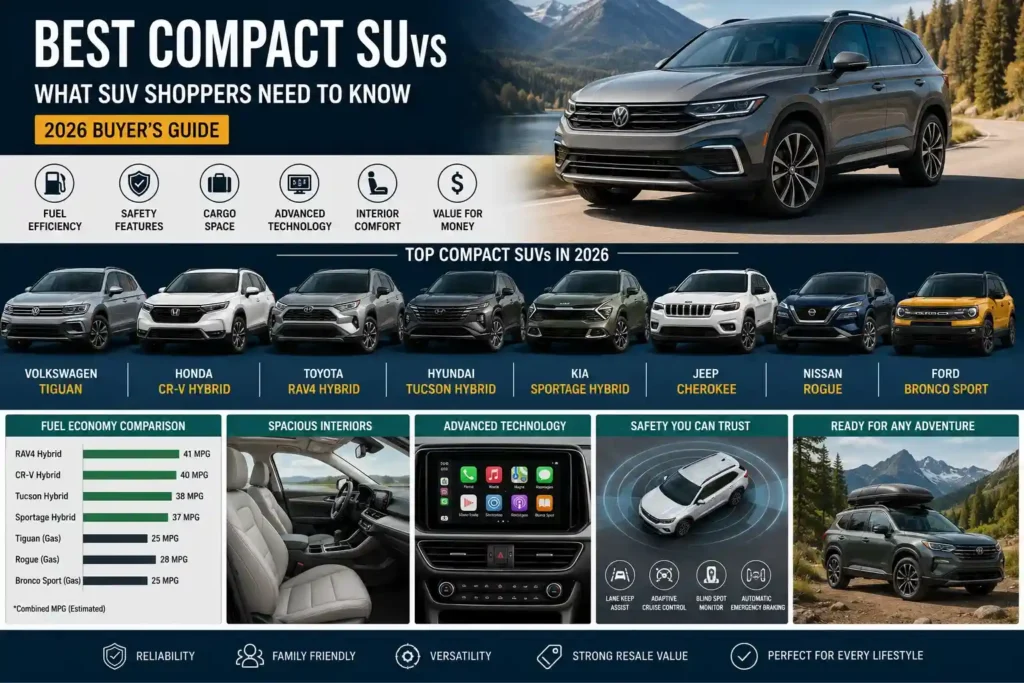
The following models consistently rank among the strongest competitors in the compact SUV segment:
| Model | Best For |
| Volkswagen Tiguan | Premium interior and driving refinement |
| Honda CR-V Hybrid | Reliability and balanced performance |
| Toyota RAV4 Hybrid | Fuel economy and resale value |
| Hyundai Tucson Hybrid | Technology and value |
| Kia Sportage Hybrid | Comfort and standard equipment |
| Jeep Cherokee Hybrid | Smooth hybrid powertrain |
| Nissan Rogue | Comfortable ride and storage solutions |
| Ford Bronco Sport | Off-road capability and visibility |
Frequently Asked Questions (FAQs)
1. What is the best compact SUV to buy in 2026?
The best compact SUV depends on your priorities. If you’re looking for a premium driving experience with an upscale interior, the Volkswagen Tiguan is an excellent choice. For outstanding fuel economy and long-term reliability, the Toyota RAV4 Hybrid and Honda CR-V Hybrid remain top contenders. Buyers seeking advanced technology and exceptional value should also consider the Hyundai Tucson Hybrid and Kia Sportage Hybrid.
2. Which compact SUV offers the best fuel economy?
Among the leading compact SUVs, the Toyota RAV4 Hybrid stands out for its excellent real-world fuel efficiency. Other strong performers include the Honda CR-V Hybrid, Hyundai Tucson Hybrid, and Kia Sportage Hybrid, all of which combine impressive MPG with smooth hybrid performance.
3. Are hybrid compact SUVs worth buying?
Yes. Hybrid compact SUVs are worth considering if you drive regularly or cover long distances. They typically offer lower fuel costs, reduced emissions, quieter operation in city traffic, and excellent resale value. Although they may cost slightly more upfront, many owners recover that difference through fuel savings over time.
4. Which compact SUV has the most cargo space?
Cargo space varies by model, but the Hyundai Tucson Hybrid and Kia Sportage Hybrid are among the leaders in this category. Their spacious cargo areas and flexible rear-seat configurations make them ideal for families, road trips, shopping, and outdoor adventures.
5. What safety features should I look for in a compact SUV?
A modern compact SUV should include a comprehensive suite of safety technologies, such as:
- Automatic Emergency Braking (AEB)
- Adaptive Cruise Control
- Lane Departure Warning
- Lane Keeping Assist
- Blind-Spot Monitoring
- Rear Cross-Traffic Alert
- Traffic Sign Recognition
- Parking Sensors
- 360-Degree Camera
- Rearview Camera
Many new compact SUVs now include these features as standard across most trim levels.
6. Which compact SUV is best for families?
Families should prioritize interior space, rear-seat comfort, cargo capacity, and safety. The Honda CR-V Hybrid, Toyota RAV4 Hybrid, Hyundai Tucson Hybrid, and Kia Sportage Hybrid consistently rank among the best family-friendly compact SUVs due to their roomy cabins, practical storage, and advanced safety systems.
7. Is all-wheel drive (AWD) necessary in a compact SUV?
All-wheel drive improves traction on wet roads, snow, gravel, and light off-road terrain. If you frequently encounter challenging weather or enjoy weekend adventures, AWD is a worthwhile investment. However, for drivers in mild climates who mainly travel on paved roads, front-wheel drive can be a more fuel-efficient and cost-effective option.
8. Which compact SUV has the best technology?
Technology offerings continue to improve across the segment. Vehicles such as the Volkswagen Tiguan, Hyundai Tucson Hybrid, and Kia Sportage Hybrid feature large touchscreen displays, digital instrument clusters, wireless Apple CarPlay and Android Auto, premium audio systems, wireless charging, and advanced driver-assistance technologies.
9. How much should I budget for a compact SUV?
Pricing depends on the model, trim level, and optional features. Entry-level compact SUVs generally start around $30,000, while well-equipped hybrid or premium trims can exceed $45,000. In addition to the purchase price, buyers should factor in insurance, fuel costs, maintenance, registration fees, and financing expenses.
10. What should I consider before buying a compact SUV?
Before making your purchase, compare several important factors:
- Fuel economy
- Engine performance
- Hybrid availability
- Interior comfort
- Rear-seat space
- Cargo capacity
- Safety ratings
- Technology features
- Reliability
- Warranty coverage
- Maintenance costs
- Resale value
- Overall value for money
Choosing the right SUV depends on your driving habits, budget, and long-term ownership goals.
Conclusion
The compact SUV market has never been more competitive, giving buyers an impressive selection of vehicles that combine efficiency, comfort, technology, and everyday practicality. Whether you prioritize fuel economy, premium interior quality, advanced safety features, or spacious cargo capacity, there is a compact SUV designed to meet your specific needs.
If you’re looking for a refined driving experience with upscale finishes, the Volkswagen Tiguan stands out as a strong all-around performer. Buyers focused on long-term reliability and fuel efficiency will appreciate the Honda CR-V Hybrid and Toyota RAV4 Hybrid, while the Hyundai Tucson Hybrid and Kia Sportage Hybrid deliver exceptional value with feature-rich interiors and modern technology. Drivers who prefer a comfortable ride, off-road-inspired styling, or unique design cues may also find the Jeep Cherokee, Nissan Rogue, or Ford Bronco Sport to be compelling alternatives.
Before making a final decision, take the time to compare real-world fuel economy, cargo space, interior comfort, safety features, ownership costs, and available warranty coverage. A thorough test drive and careful evaluation of your daily driving needs will help ensure you choose a vehicle that fits both your lifestyle and budget.
No single compact SUV is perfect for everyone, but by understanding each model’s strengths and compromises, you’ll be well-equipped to make a confident purchase. With the right research and planning, your next compact SUV can provide years of reliable performance, comfort, and value.
